Uber Technologies,
Nuro, and Lucid Group have announced that
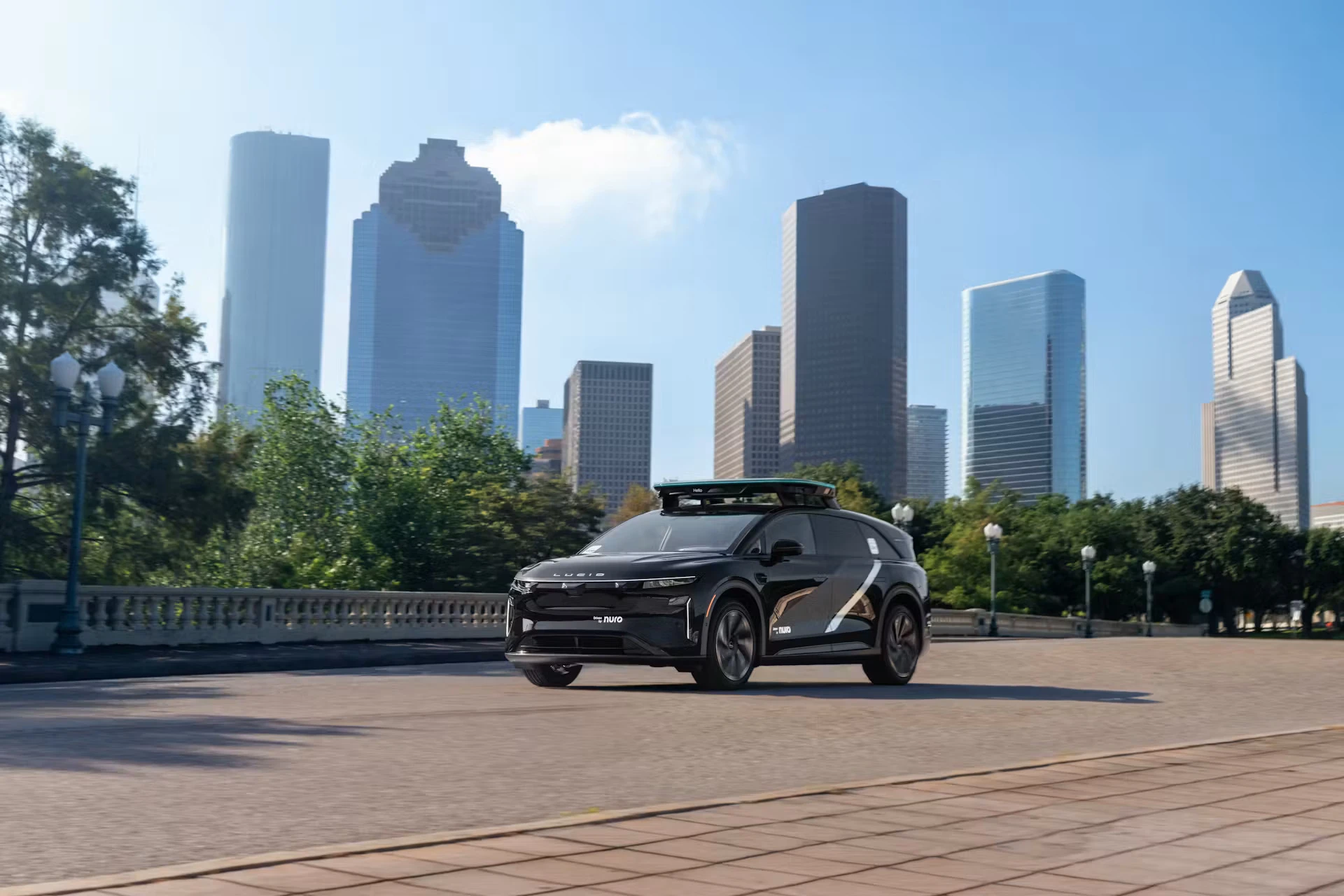
Houston will become the second planned market for their autonomous robotaxi service, following the program’s launch in the San Francisco Bay Area later this year. The companies aim to begin operations in Houston by mid-2027, with rides available exclusively through the Uber platform. Over time, the partners plan to expand the service to dozens of additional markets.
As part of the program’s development, Nuro has already begun autonomous vehicle testing with safety operators on public roads in Houston. The company is responsible for developing and validating the autonomous driving system using a phased approach that combines simulation, closed-course testing, and supervised public-road operations. Supporting these efforts is an engineering fleet of nearly 100 vehicles operating across California and Texas, with testing activities running around the clock. The fleet is expected to grow further as Lucid begins producing the first validation robotaxis at its factory in Arizona, where vehicles will also undergo safety testing and regulatory certification.
The companies also revealed that Uber has secured a 50,000-square-foot depot and dedicated charging facility in Houston. These sites will serve as the operational hub for the robotaxi program, supporting a fleet of Lucid Gravity vehicles equipped with Nuro’s autonomous driving technology. The facilities will handle key fleet-management functions, including charging, maintenance, repairs, cleaning, and daily operational support at scale.
As the fourth-largest city in the United States, Houston offers an attractive environment for autonomous mobility due to its size, diverse transportation needs, and well-defined regulatory framework. The city is also a familiar operating environment for Nuro, which has maintained a presence there since 2019 and previously conducted Level 4 autonomous vehicle operations on public roads. Leveraging years of local experience and established relationships with communities, first responders, and policymakers, Nuro continues to prioritize safety as it prepares for the commercial deployment of the robotaxi service.
“Houston marks an important next step in our partnership with Lucid and Nuro as we expand autonomous mobility to more riders throughout the world,” said Sarfraz Maredia, Global Head of Autonomous Mobility & Delivery at Uber. “Together, we’re combining best-in-class vehicle and autonomy technology with Uber’s scale, fleet operations expertise, and infrastructure capabilities to build a service that can grow across dozens of markets in the years ahead.”
“Houston is a city Nuro knows well, and we’re excited to help bring this robotaxi service to the city through our partnership with Uber and Lucid,” said Andrew Chapin, Chief Operating Officer at Nuro. “Houston’s large, complex metro area is an ideal market for demonstrating how Nuro’s universal autonomy platform can generalize across different geographies and operating environments. We look forward to continued engagement with the community as we prepare to launch service in 2027.”
"Our partnership with Uber and Nuro continues to accelerate at a remarkable pace, and the launch of our program in Houston next year will be another major milestone," said Kay Stepper, Vice President of ADAS and Autonomy at Lucid. "Our rapid progress toward commercial launch showcases how Lucid's technology and engineering are ideally suited to power the future of autonomous mobility and we look forward to working with our partners to bring that premium experience to even more riders next year."
First announced in July 2025, the global robotaxi initiative combines the strengths of three industry leaders: Lucid’s advanced electric vehicle technology and manufacturing expertise, Nuro’s Level 4 autonomous driving platform and validation capabilities, and Uber’s extensive ride-hailing network, fleet management experience, and global customer base. The program is scheduled to debut in the San Francisco Bay Area later this year and is expected to deploy at least 35,000 autonomous vehicles across dozens of markets worldwide in the years ahead.
The service will initially utilize the award-winning Lucid Gravity, followed by future Lucid midsize vehicle models, all equipped with the Nuro Driver™, Nuro’s Level 4 autonomous driving system. The vehicles will feature a comprehensive redundant sensor suite that includes cameras, lidar, radar, and a roof-mounted sensor array to support safe and reliable autonomous operation.
Uber is responsible for designing the overall passenger experience, including personalization features, customer support, and rider controls, while Nuro will provide the autonomy visualization systems. The robotaxis will be owned and operated by Uber and its fleet partners, with rides available exclusively through the Uber platform.