NVIDIA Expands NVIDIA Agent Toolkit With NVIDIA PhysicsNeMo and CUDA-X Libraries to Transform How the World Engineers, Designs and Builds
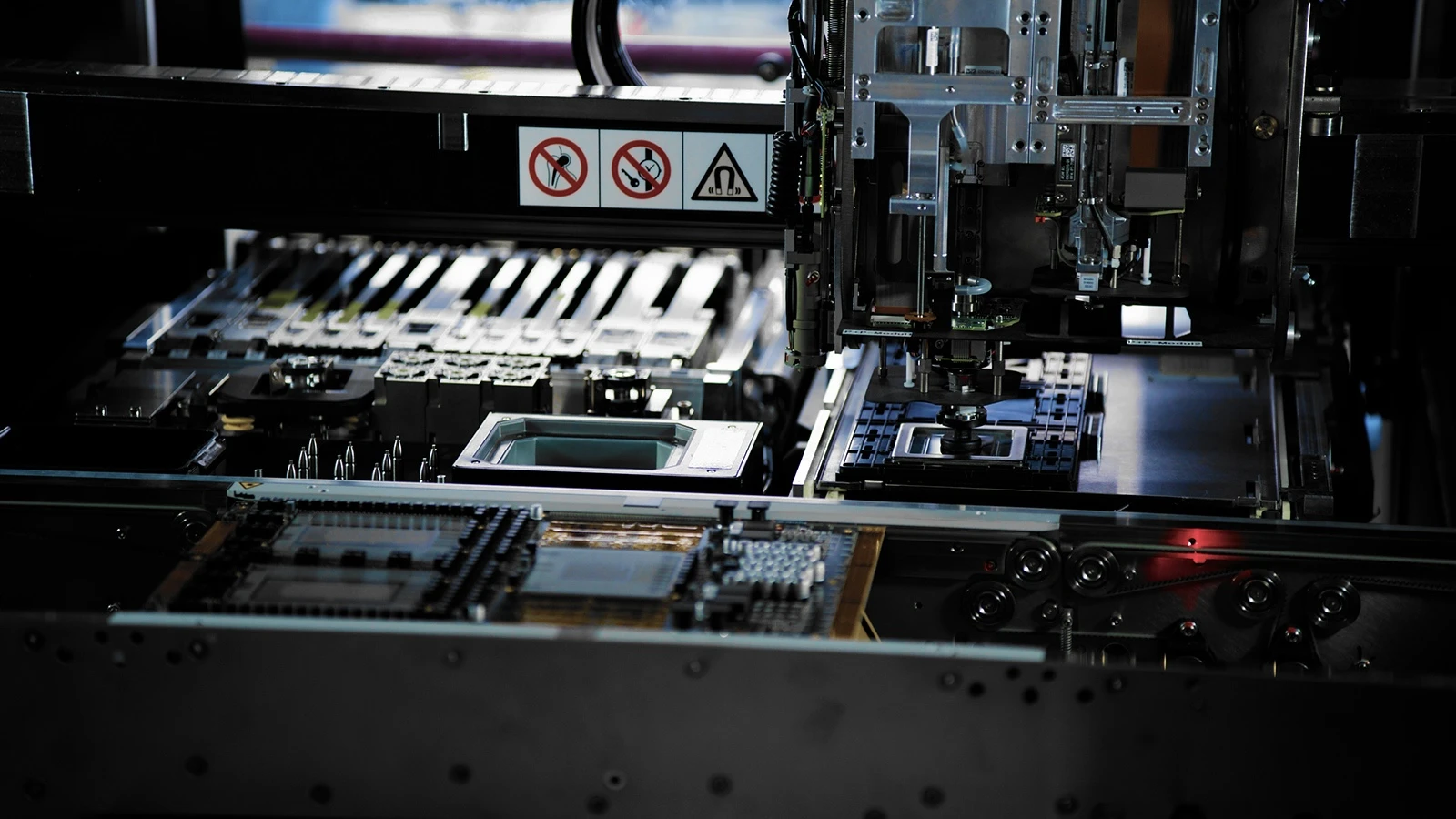
NVIDIA has expanded its NVIDIA Agent Toolkit for engineering by introducing NVIDIA PhysicsNeMo™ and CUDA-X™ libraries as agent-ready tools and skills, enhancing AI-powered engineering workflows for product design and development.
The latest update is designed to support the growing role of autonomous AI engineers in tackling increasingly complex chip and system design processes. By integrating physics, simulation, and performance analysis, the toolkit helps streamline tasks such as chip design, verification, packaging, and system development.
As part of the expansion, NVIDIA has re-architected PhysicsNeMo into agent-friendly libraries that provide AI-powered physics capabilities for training and deploying models. The company has also added new and enhanced CUDA-X libraries, delivering accelerated solvers and quantum chemistry capabilities to enable more advanced, high-performance engineering workflows.
“Engineering has reached an inflection point. AI can now work with tools of physics, simulation and design,” said Timothy Costa, vice president and general manager of computational engineering at NVIDIA. “With NVIDIA Agent Toolkit, developers can build agentic engineers that reason using physics, run complex simulations and generate high-fidelity data to become a new engine for innovation in chip and system design.”
NVIDIA Agent Toolkit Adds AI Physics and Accelerated Computing Skills for Engineering Agents
NVIDIA Agent Toolkit enables developers to build specialized AI engineering assistants that integrate with domain-specific tools, models, and datasets. With the addition of NVIDIA PhysicsNeMo and CUDA-X libraries, these AI agents can now leverage advanced physics-based AI, accelerated computing solvers, and quantum chemistry capabilities to support chip design, system engineering, and industrial development.
Key capabilities include:
- AI physics skills: NVIDIA PhysicsNeMo libraries help agents train and deploy customizable AI physics models for complex design and simulation tasks, turning model architectures into callable tools for engineering workflows.
- Iterative sparse solvers: New NVIDIA cuISS (CUDA Iterative Sparse Solvers) library accelerates large sparse linear systems in physics-based and engineering simulations. Designed for flexibility and performance on GPUs, its modern, composable solvers and preconditioners help developers build scalable, production simulation engines for agentic engineering workflows.
- Direct sparse solvers: NVIDIA cuDSS (CUDA Direct Sparse Solvers) accelerates large, complex sparse linear systems central to electronic design automation (EDA) and scientific simulation. It delivers high performance and numerical robustness for critical workloads like device, circuit and system simulations with scalability to multi-GPU and multi-node deployments in production environments.
- Quantum chemistry: NVIDIA cuEST (CUDA Electronic Structure Theory) brings high-accuracy quantum chemistry simulations to device-relevant scales, enabling density functional theory (DFT) and post-DFT methods to be integrated into production workflows at scale. cuEST brings production value to customers by supporting a wide range of modern functionals and making increasingly large ground-state and excited-state simulations manageable on NVIDIA GPUs.
NVIDIA Nemotron 3 Ultra Open Model Advances Agentic Coding for Chip Design
NVIDIA is also advancing AI-driven chip design through ACE-RTL, an AI agent developed by NVIDIA Research for hardware design using register-transfer level (RTL) coding. Powered by NVIDIA Nemotron™ 3 Ultra, the agent ranks among the leading open models for agentic RTL coding, delivering strong performance across comprehensive Verilog design benchmarks.
Designed for the demanding requirements of chip development, Nemotron 3 Ultra offers high accuracy, efficient performance, and the ability to be post-trained on proprietary data. It can be deployed locally or on-premises, giving enterprises greater control, customization, and data privacy when developing AI-powered chip design agents.
To accelerate adoption, developers can integrate Nemotron 3 Ultra with engineering platforms from Cadence, Synopsys, and Siemens, while also accessing the model through Hugging Face to build advanced AI workflows for chip design and verification.
Software Leaders Build Autonomous AI Engineers With NVIDIA
Leading industrial engineering companies are adopting the expanded NVIDIA Agent Toolkit to develop autonomous AI engineers that accelerate semiconductor and industrial design workflows.
Cadence is integrating NVIDIA Nemotron, CUDA-X libraries, and accelerated computing into its AuraStack AI Super Agent and Millennium M2000 platform, enabling advanced packaging and printed circuit board (PCB) design with up to 20x faster multiphysics performance. The collaboration also includes optimizing Cadence's electronic design automation (EDA) tools for the NVIDIA Vera CPU to speed up chip verification.
Synopsys is leveraging the NVIDIA Agent Toolkit, NIM™ microservices, Nemotron models, NeMo™ Gym, and NemoClaw™ blueprints to power secure AI-driven chip and system design workflows. Its AI agents automate complex simulation tasks, including GPU cooling optimization, while the company's VCS verification platform is also being optimized for the NVIDIA Vera CPU to improve verification performance.
Siemens is combining NVIDIA NeMo Gym, Nemotron models, and CUDA-X libraries with its Fuse EDA AI Agent to orchestrate AI-powered semiconductor, 3D-IC, PCB, and system design workflows. The company reports more than 10x faster library characterization while significantly reducing AI processing costs.
Samsung is using NVIDIA cuLitho and CUDA-X libraries to accelerate computational lithography by up to 20x, while NVIDIA PhysicsNeMo enables highly accurate chip-scale thermal stress analysis. ChipAgents is also adopting the NVIDIA Agent Toolkit to develop specialized AI agents for semiconductor design and verification.
Meanwhile, Silvaco is utilizing NVIDIA accelerated computing to perform large-scale 3D optical simulations that exceed the practical capabilities of CPU-based systems. Keysight is applying NVIDIA cuDSS to accelerate electromagnetic simulations by up to 10x, while Samsung, Synopsys, and TSMC are integrating NVIDIA cuEST into GPU-accelerated workflows to achieve up to 50x faster quantum chemistry computations.