DJI Releases Mining Automation White Paper With Australian Case Studies Showing 60% Efficiency Gains
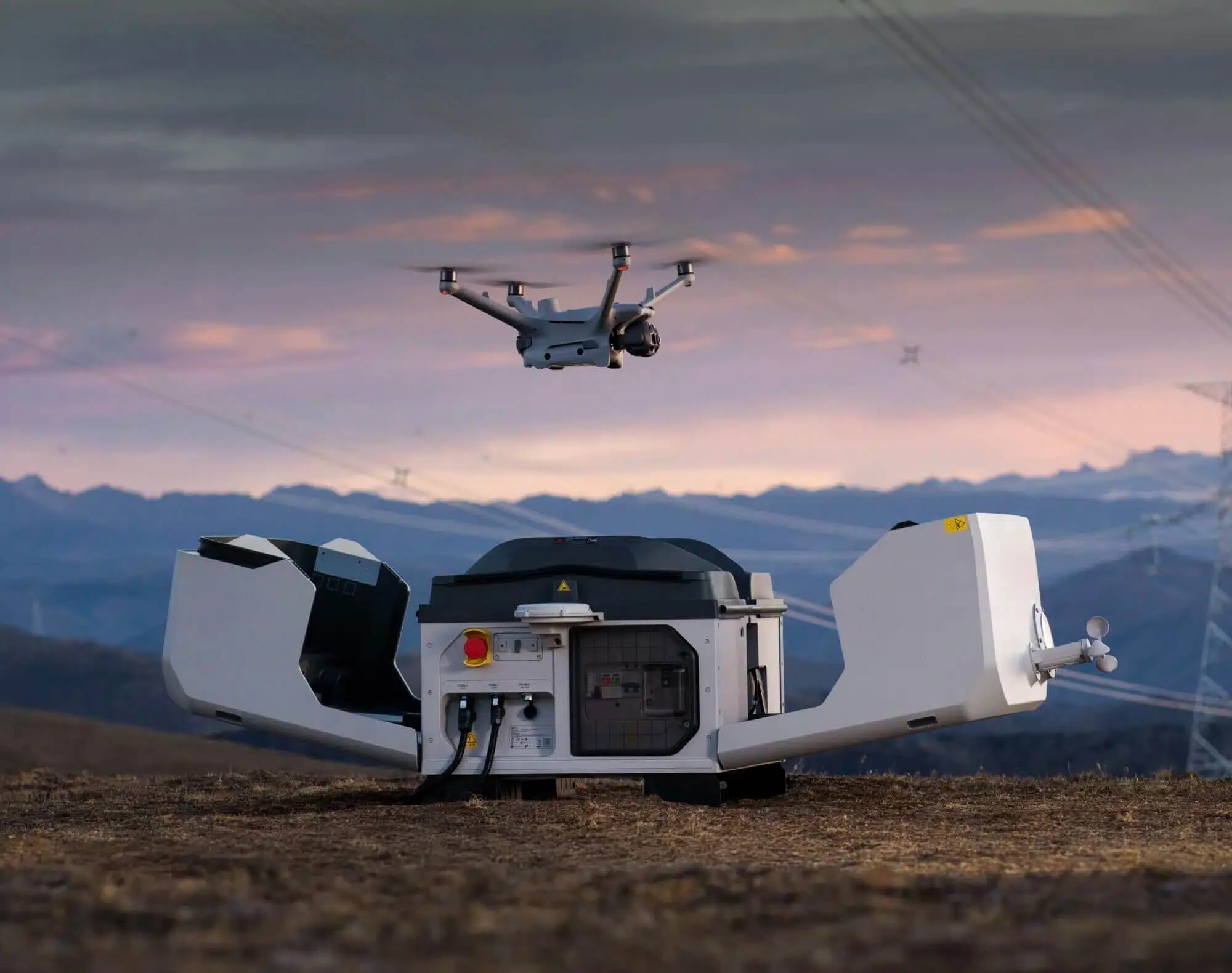
DJI Enterprise has released a detailed white paper offering mining operators a practical guide to moving from manual drone operations to fully automated Beyond Visual Line of Sight (BVLOS) workflows using DJI Dock systems. The publication includes real-world case studies from Australian mines, highlighting significant gains in productivity alongside improved worker safety.
The release comes at a pivotal time as the global mining sector accelerates its shift toward automation and remote operations. With industry revenues surpassing USD3 trillion in 2023, mining companies worldwide are increasingly focused on boosting operational efficiency while minimizing risks to personnel working in inherently hazardous conditions.
Dramatic Efficiency Gains in Real-World Operations
DJI’s white paper outlines measurable productivity gains achieved in Australian mining operations. The findings show that automated DJI Dock workflows reduced the time needed to capture and process post-blast photogrammetry surveys from 1.2 hours to just 30 minutes, compared with manual drone operations.
The productivity benefits extend well beyond flight activities. Using a single DJI Dock system, remote pilots working eight-hour shifts can complete around 150 to 200 flights per month, accounting for up to 50 total flight hours. Automation of ground control point marking delivered even greater efficiency, cutting data processing time by as much as 94%.
According to the white paper, these gains are driven by the removal of travel time to inspection sites, lower on-site staffing needs for drone operations, and more streamlined photogrammetry processing through automation and integration with existing software platforms.

Australian Mining Operations Prove Dock Reliability in Extreme Conditions
The white paper presents two in-depth case studies from Australian mining sites where DJI Dock systems were tested in challenging real-world environments. At Rio Tinto’s Gudai-Darri iron ore mine in the Pilbara, automated drone operations proved reliable under extreme conditions, including temperatures of up to 50°C (122°F), heavy magnetic red dust, and cyclone-prone weather.
Gudai-Darri, Rio Tinto’s most advanced mining operation, already employs autonomous haul trucks, drills, water carts, and heavy-haul trains that are remotely supervised from Perth more than 1,500 kilometers away. The introduction of DJI Dock enabled fully automated, remotely monitored flights with autonomous recharging, supporting data-driven decision-making while enhancing safety and operational efficiency.
Meanwhile, at Paddington Operations near Kalgoorlie in Western Australia’s goldfields, DJI Dock was used for aerial surveys of post-blast muckpiles. Through AI-based modeling, operators improved grade control, minimized ore dilution, and reduced processing costs by identifying higher-grade material for the processing plant. The site is owned by Norton Gold Fields and is supported by a processing facility with a capacity of 3.73 million tonnes per annum.

Navigating Complex BVLOS Regulatory Requirements
A substantial section of DJI’s white paper examines the regulatory and operational foundations required to scale automated Beyond Visual Line of Sight (BVLOS) operations. The guide outlines key licensing and approval pathways, including Remote Pilot Licence requirements, BVLOS authorisations, operations outside controlled airspace, Instrument Rating Examination qualifications, and Specific Operations Risk Assessment (SORA)–based BVLOS approvals.
The paper also addresses certification requirements for Remote Operating Centres, along with human–machine interface design considerations. Critical operational elements such as system redundancy, fatigue management, emergency response procedures, and stakeholder engagement for operations in complex airspace are also covered.
DJI’s emphasis on the Australian regulatory environment highlights the country’s forward-looking stance on BVLOS operations. The Civil Aviation Safety Authority (CASA) has established frameworks that enable qualified operators to self-assess sites for BVLOS activities, significantly reducing approval timelines compared to traditional location-by-location authorisations.
Enhanced Safety Through Remote Operations
Mining sites involve inherent risks, including the presence of heavy mobile equipment, open pits, blasting operations, and exposure to extreme environmental conditions. The white paper highlights how automated drone workflows allow inspections to be carried out more frequently while enabling operators to work safely from Remote Operations Centers, away from pit walls, blast areas, tailings facilities, and hypersaline pipelines.
From an operational perspective, automated workflows allow blast movement analysis to be completed rapidly, supporting safer and faster restart procedures. Surveys and inspections can be conducted on a more regular and consistent basis than is possible with manual operations. When combined with intelligent analytics and automated alerting, these systems help ensure asset and pipeline integrity, confirm environmental compliance following weather events, and keep infrastructure development on schedule.
In addition, automation enables trigger-based data capture using “If This, Then That” logic, allowing data processing and reporting to be automatically initiated when specific changes or objects are detected, resulting in more responsive and proactive monitoring capabilities.
Implementation Roadmap for End-to-End Automation
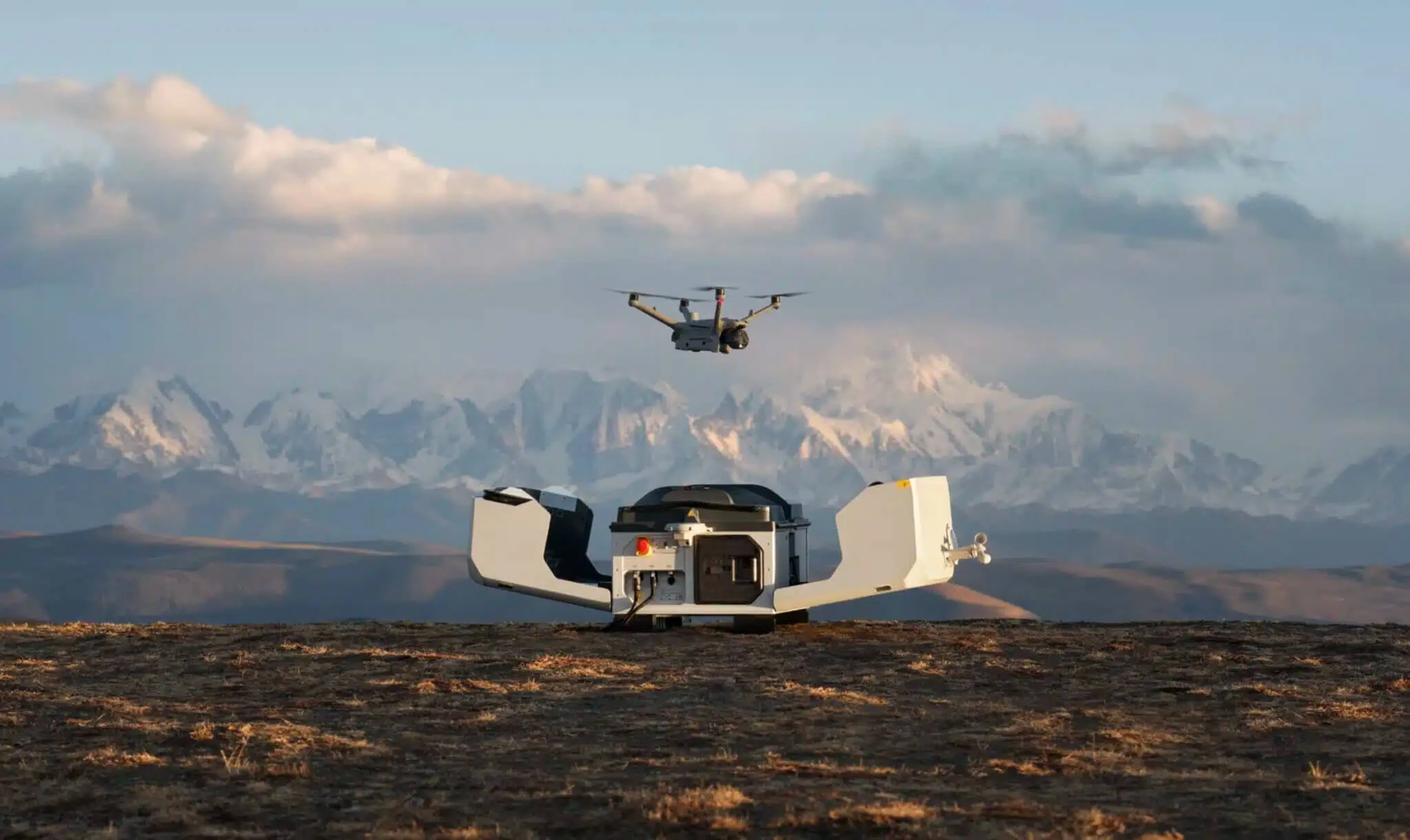
DJI’s white paper offers comprehensive guidance on deploying end-to-end automated mining workflows using the DJI Dock hardware platform in combination with FlightHub 2 flight control software. It outlines how operators can remotely plan missions, schedule flights in advance, and deploy docked drones on demand when rapid aerial insights are required.
The publication provides step-by-step explanations for automating data processing through existing photogrammetry software platforms. Use cases include automated volumetric analysis of ore stockpiles using geotechnical models, standardizing data capture across multiple sites, and establishing consistent reporting structures.
For mining operators evaluating a shift to automation, the white paper functions as both a technical manual and a business case, demonstrating clear returns on investment through lower labor requirements, higher flight frequency, accelerated data processing, and enhanced safety performance.
DroneXL’s Take
The publication of this white paper marks a key maturity milestone for DJI’s Dock platform, demonstrating its readiness for one of the most demanding commercial use cases. When DJI Dock 2 was first introduced in March 2024, its real-world applicability remained largely conceptual for many sectors. The latest findings now provide concrete return-on-investment data from mining operations, including a 60% reduction in survey time, up to 94% savings in data processing, and the ability to conduct 150 to 200 flights per month from a single dock.
The Australian case studies are particularly instructive given the regulatory contrast with the United States. In Australia, mining operators can leverage BVLOS self-assessment frameworks that compress approval timelines from months to days. In contrast, U.S. operators are still contending with proposed Part 108 regulations, which industry stakeholders caution could restrict or eliminate existing waiver pathways.
The deployment at Rio Tinto’s Gudai-Darri mine builds on earlier work highlighted this year, when RocketDNA implemented its xBot system at the same site, validating BVLOS operations under extreme Pilbara conditions. This white paper advances that progress further by offering a repeatable implementation model that other mining operations can adopt.
Historically, the mining sector has led adoption of automation to improve safety and efficiency. The evolution from the original DJI Dock paired with the Matrice 30, to the enhanced Dock 2, and now the newly launched Dock 3, reflects rapid iteration shaped by real-world feedback from highly demanding environments such as mining.
The broader question facing other industries is clear: if automated BVLOS workflows can operate reliably in 50°C heat, magnetic dust, and cyclone-prone conditions while delivering measurable efficiency gains, what barriers remain to wider adoption in less extreme settings? Increasingly, the answer points to regulatory constraints rather than technological capability.