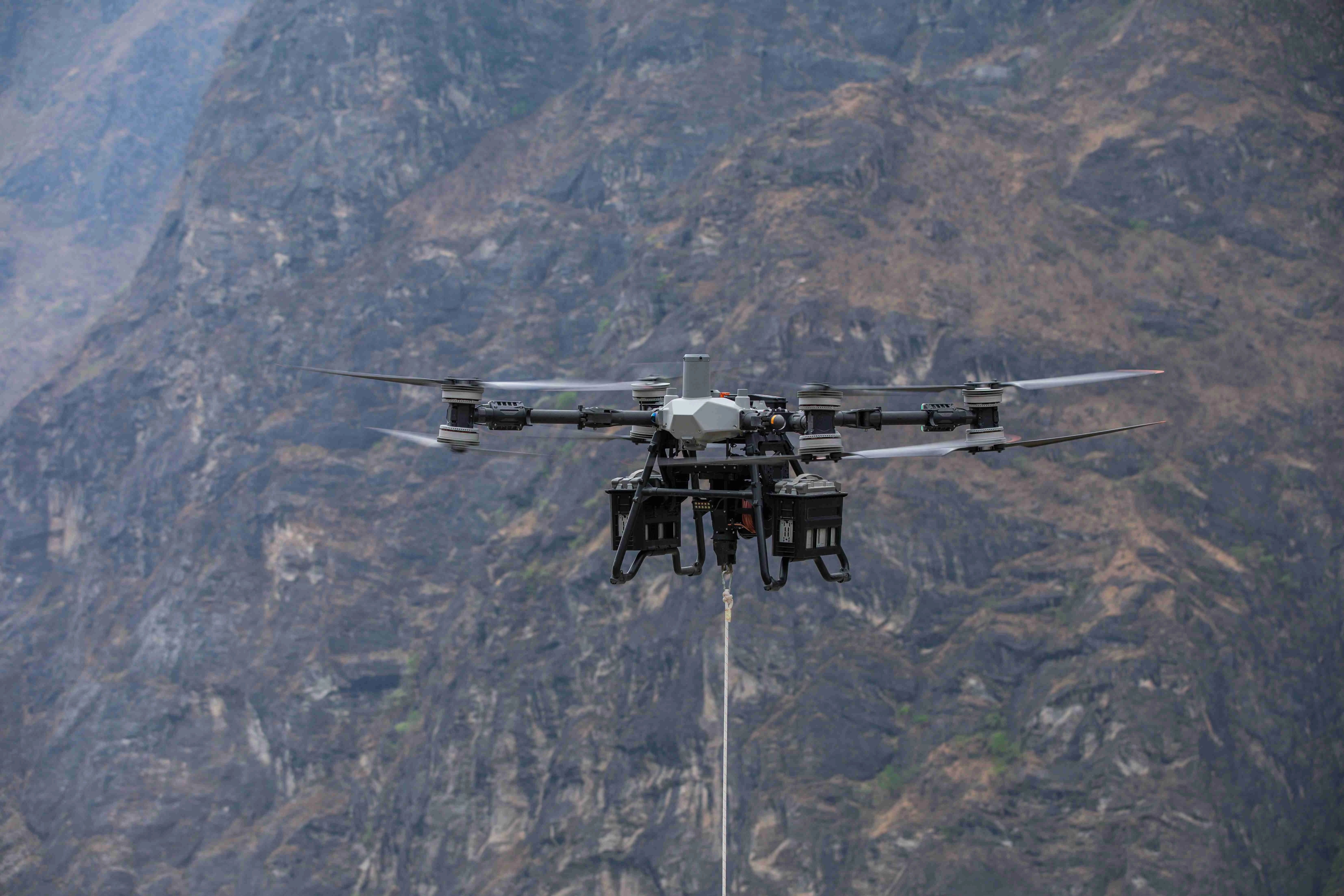
DJI, the global leader in civilian drones and creative camera technology, has announced the worldwide launch of the DJI FlyCart 100 (FC100). Building on the breakthrough FlyCart 30—which enabled aerial deliveries on Mount Everest—the new-generation delivery drone offers a significantly higher payload capacity of up to 100 kg, faster charging capabilities, and an advanced safety system featuring LiDAR, a parachute, and multi-sensor obstacle avoidance. To further enhance flight operations management, DJI is also rolling out the DJI Delivery App alongside the DJI DeliveryHub.
“DJI continues to innovate to meet industry needs. Even in the early days of aerial delivery, our advanced civilian drone technology has become the trusted solution globally for emergency response, construction, and supply chain logistics – from transporting air tanks and trash on Mount Everest to delivering emergency supplies after the devastating floods,” says Hao Jin, the Head of DJI Delivery Sales at DJI. “With the next-generation DJI FC100, we built a drone that can deliver more – in payload capacity, endurance, and safety - and support more applications across more industries.
Greater Payload Capacity Up to 100 kg (Max Takeoff Weight Up to 170 kg )
The FC100 is engineered to perform in demanding conditions, capable of operating across mountainous terrain and over rivers, lakes, and bays. Evolving from its predecessor’s coaxial four-axis, eight-rotor design, the FC100 incorporates an optimized airframe, 62-inch carbon-fiber propellers, and larger, higher-torque motors. These enhancements enable the drone to transport payloads of up to 65 kg over a distance of 12 km using a dual-battery setup—more than double the previous 30 kg capacity. In an emergency single-battery configuration, it can carry as much as 80 kg over 6 km, compared with the earlier 40 kg limit.
Ultra-Fast Charging
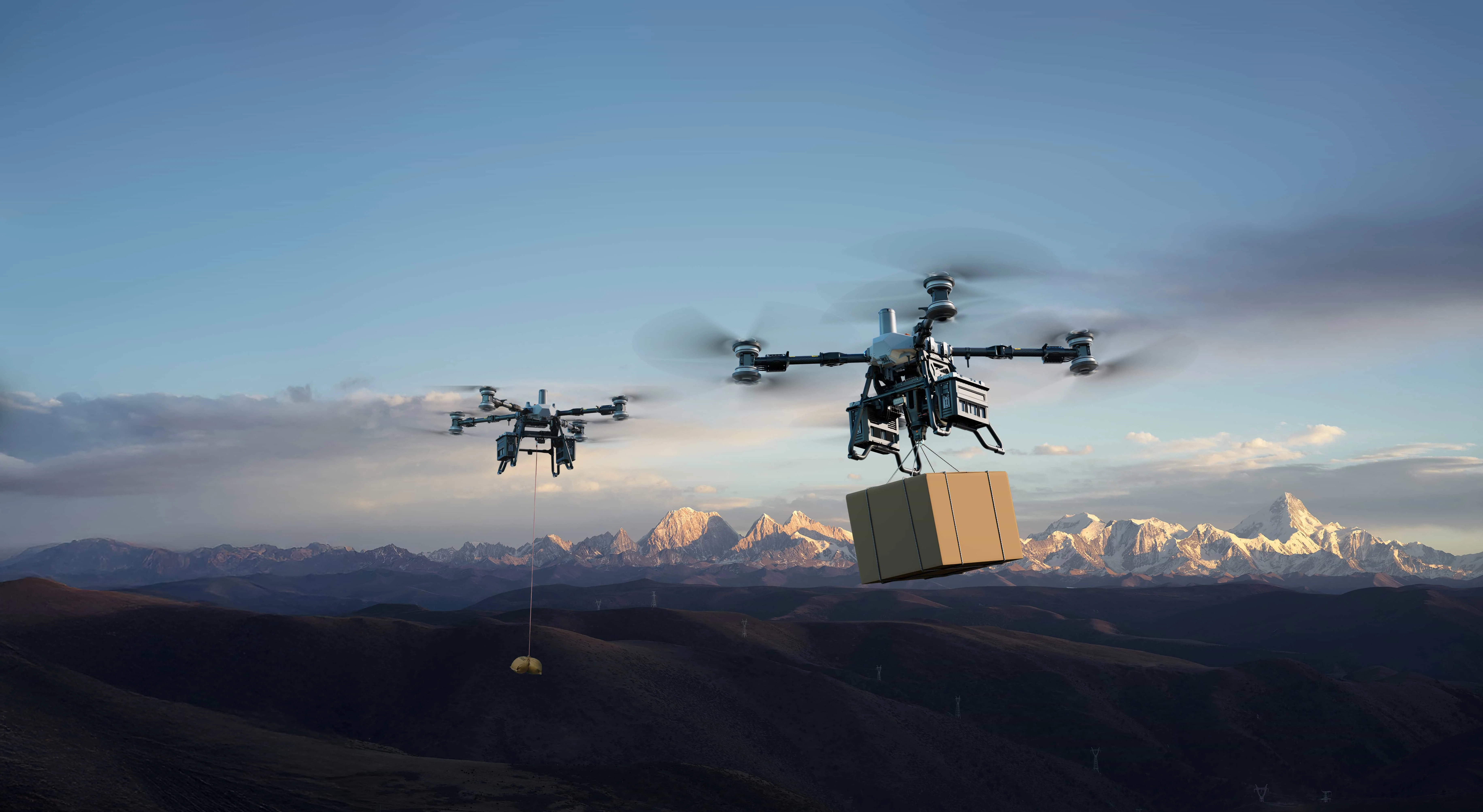
The newly launched DJI Delivery App allows pilots to control the FC100 using their remote controller, offering features such as A–B Route Operation Mode and an AR display. Through a simplified interface, pilots can monitor real-time flight conditions and track cargo delivery details.